
Search North Carolina Public Records
North Carolina public records are kept by state agencies and all 100 county offices across the state. These records include court filings, vital records like birth and death certificates, property deeds, marriage licenses, and more. You can search for public records online through the North Carolina eCourts portal, at the county Register of Deeds, or by visiting a Clerk of Superior Court office. This guide shows you how to find and access public records in North Carolina.
North Carolina Public Records Quick Facts
Where to Find North Carolina Public Records
North Carolina has several main sources for public records. The type of record you need will tell you where to look. Court records are held by the Clerk of Superior Court in each county. Vital records such as birth, death, and marriage certificates come from either the county Register of Deeds or the state Vital Records office in Raleigh. Property records are filed at the county Register of Deeds as well. Each of the 100 counties in North Carolina keeps its own set of local public records.
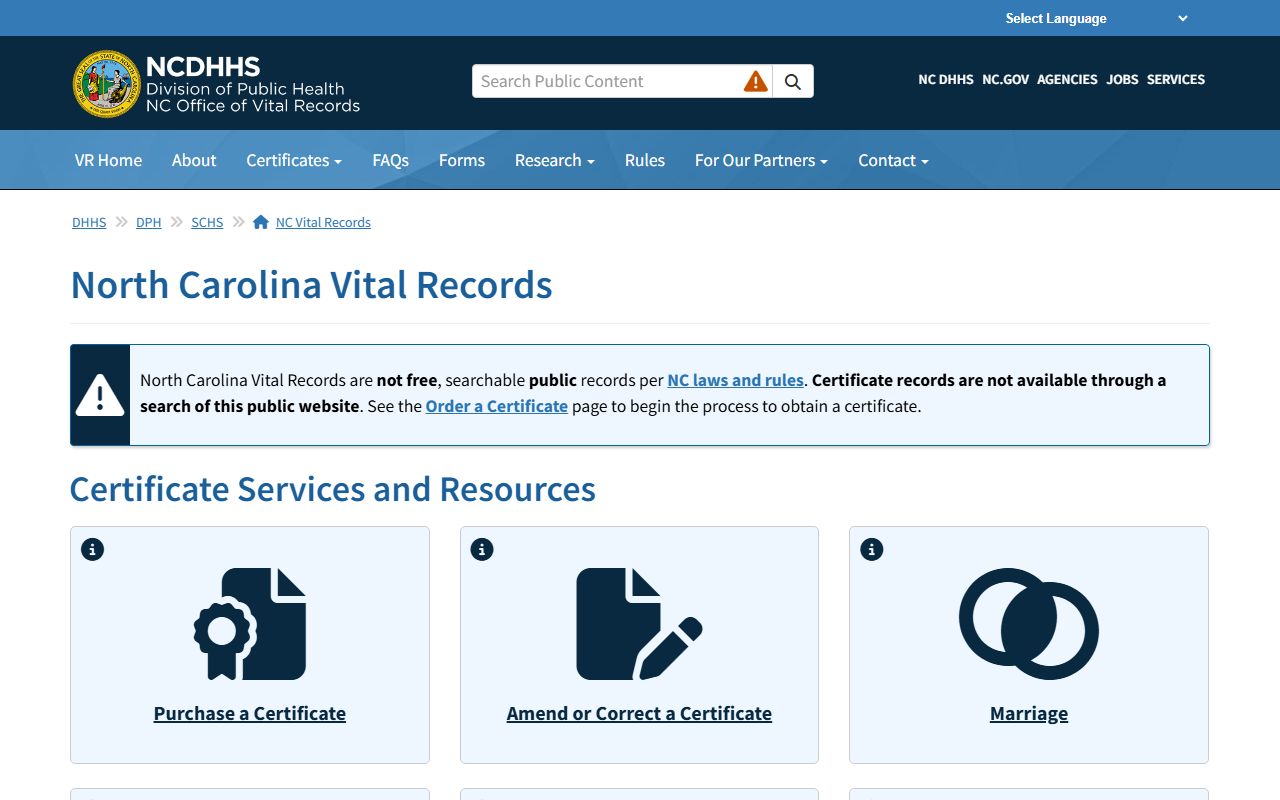
The North Carolina Vital Records office is part of the Division of Public Health. It is located at 225 N. McDowell St., Raleigh, NC 27603. The office has birth records from October 1913 to the present, death records from January 1930 forward, marriage certificates from 1962, and divorce records from 1958. Due to high demand from REAL ID rules, certificate orders placed in 2025 may take 110 to 115 business days to process. The fee is $24 per certificate, with extra copies at $15 each. In-person service is by appointment only, and the call center is open Monday through Friday from 8:00 a.m. to 5:00 p.m. at 919-733-3000.
For older records not held by Vital Records, the North Carolina State Archives collects county government records of statewide value. These include bonds, court records, land records, estate records, marriage and vital records, wills, and taxes. The State Archives also has Alien Registration and Naturalization records with photos, county of origin, and family details. Digital collections cover Confederate Pension Applications, Colonial Court Records, and General Assembly Session Records.
Note: For birth records before 1913, contact the Register of Deeds in the county where the birth took place rather than the state Vital Records office.
How to Search Public Records in North Carolina
North Carolina gives you several ways to look up public records. Online access is the fastest for most searches. The North Carolina Courts system lets you search case records from any county. You can find civil, criminal, and estate case data through public self-service terminals at any clerk of court office or through the eCourts portal online.
The North Carolina eCourts Portal is being rolled out in phases across the state. It lets you search by name, case number, or other details. Basic case data is free. Not all counties have full eCourts access yet, so some records may only be at the courthouse. You can check the NC Courts website to see which counties are live on the system. For copies of court documents, you must contact the clerk of court in the county where the case was filed.
To search public records in North Carolina, you may need:
- Full name of the person or party
- County where the record was filed
- Case number or document type
- Date range for the record
Paper files for court cases can be viewed at the clerk of court office in the county where the case is located. Staff can make copies for a fee. For vital records, you can order by mail, in person by appointment, or through the county Register of Deeds. Each county sets its own hours and copy fees, so call ahead before you visit.
Types of Public Records in North Carolina
North Carolina public records cover a wide range of documents. The North Carolina Public Records Act, N.C.G.S. Chapter 132, defines public records as all documents made or received by any agency of state or local government. Citizens have the right to access these records. There are some limits, but most records are open to anyone who asks.
Court records make up a large share of public records in North Carolina. The Clerk of Superior Court in each county maintains criminal case files, civil lawsuit records, special proceedings, and estate matters. You can look up case status, party names, filing dates, and disposition details. Divorce judgments, child custody orders, and civil judgments are all part of the public court record in North Carolina. Under N.C.G.S. 50-6, divorce records are created when a court grants an absolute divorce after the required one-year separation period.
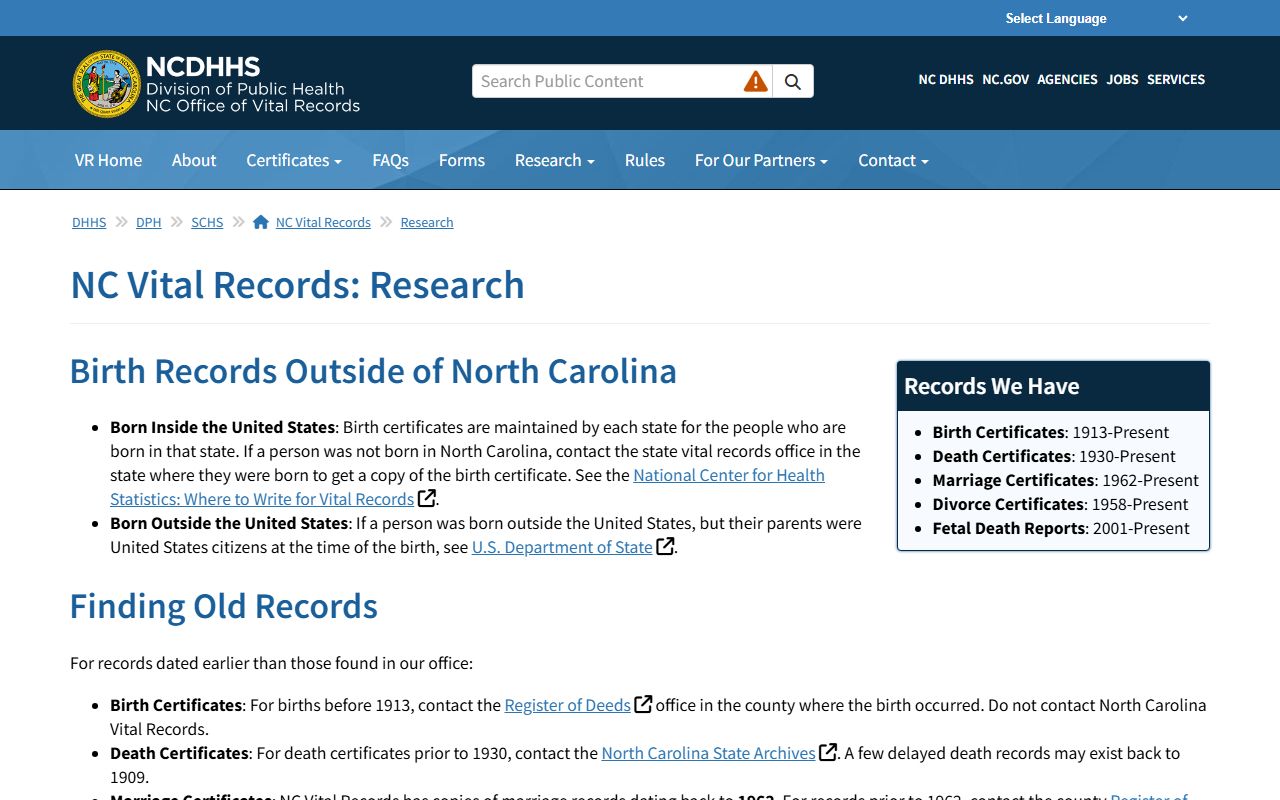
Vital records include birth certificates, death certificates, marriage licenses, and divorce verifications. The NC Vital Records Research page explains where to find older records. For genealogical work, the Vital Records office charges $24 for each three-year period searched, whether or not a record is found. The NC State Library has guides for locating vital records across the state, including marriage banns from the 1600s and cohabitation bonds from 1866.
North Carolina Property and Business Records
Property records in North Carolina are filed at the county Register of Deeds. These include deeds, deeds of trust, mortgages, subdivision plats, and powers of attorney. The Register of Deeds is the legal custodian of these documents. North Carolina General Statutes govern each Register of Deeds office and require it to protect the integrity, completeness, and safekeeping of all public records in its care.
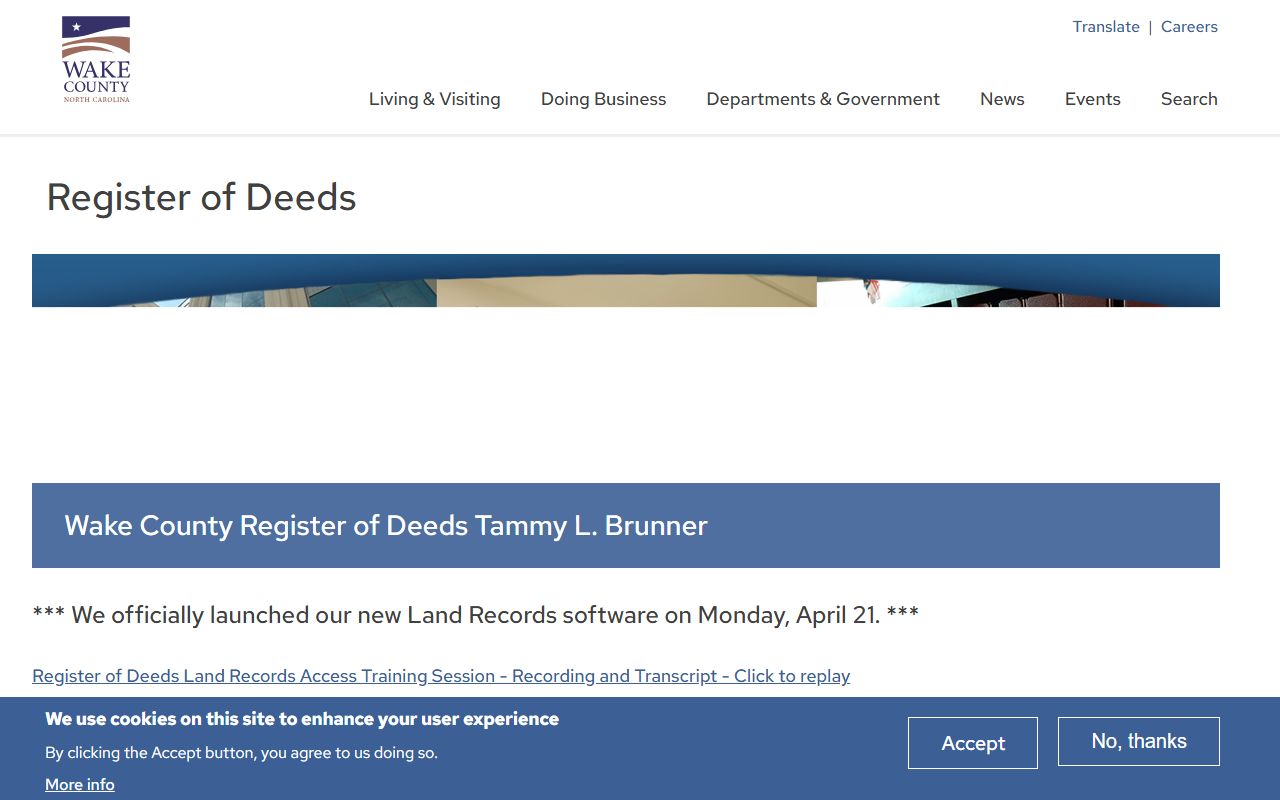
The Wake County Register of Deeds, for example, launched new Land Records software in 2025. The office is at the Wake County Justice Center, 300 S. Salisbury St., Suite 1700, Raleigh, NC 27601. Hours are Monday through Friday, 8:30 a.m. to 5:00 p.m. Each county Register of Deeds also issues marriage licenses and supplies copies of birth and death certificates.
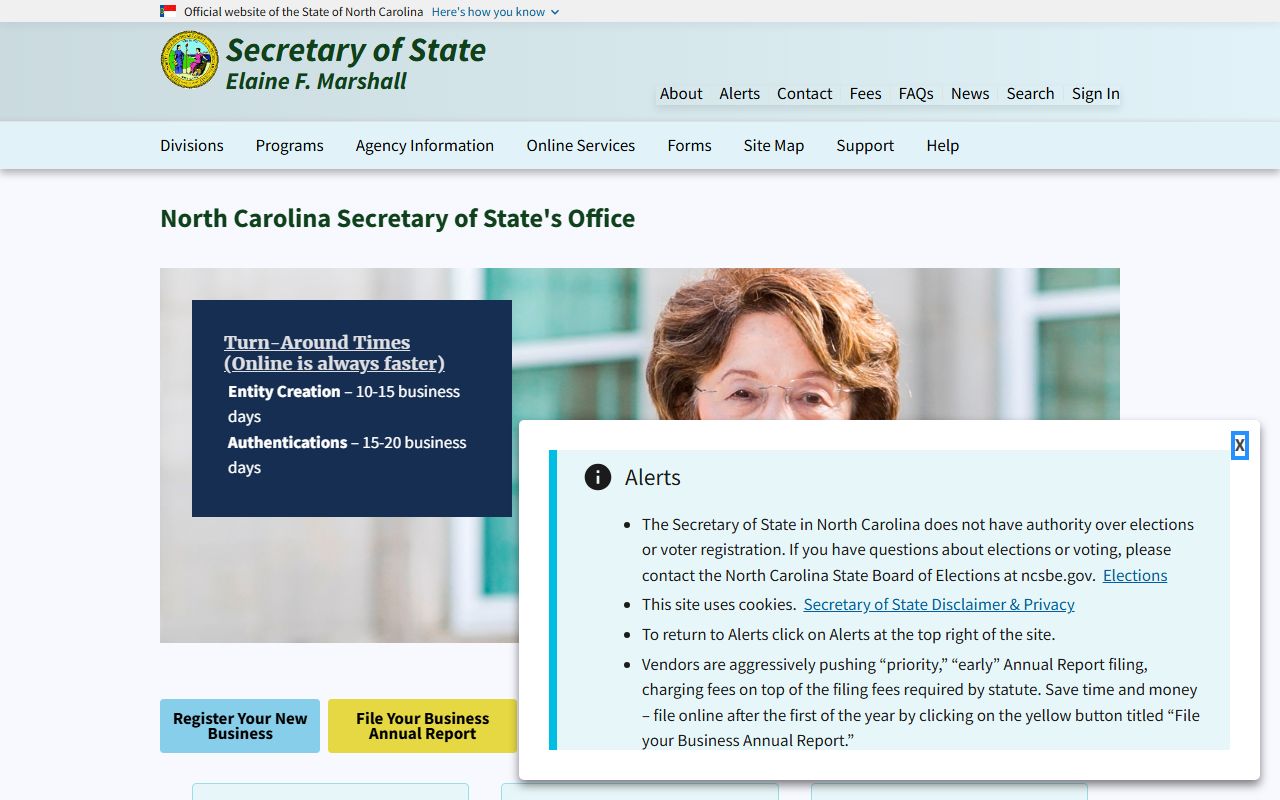
Business records are held by the North Carolina Secretary of State. You can search for corporations, LLCs, partnerships, and assumed business names online. Current processing times for entity creation are 10 to 15 business days. The Secretary of State also handles trademark registration, charitable solicitation licensing, and notary commissions. Annual reports can be filed online instantly.
Criminal Records and Law Enforcement in North Carolina
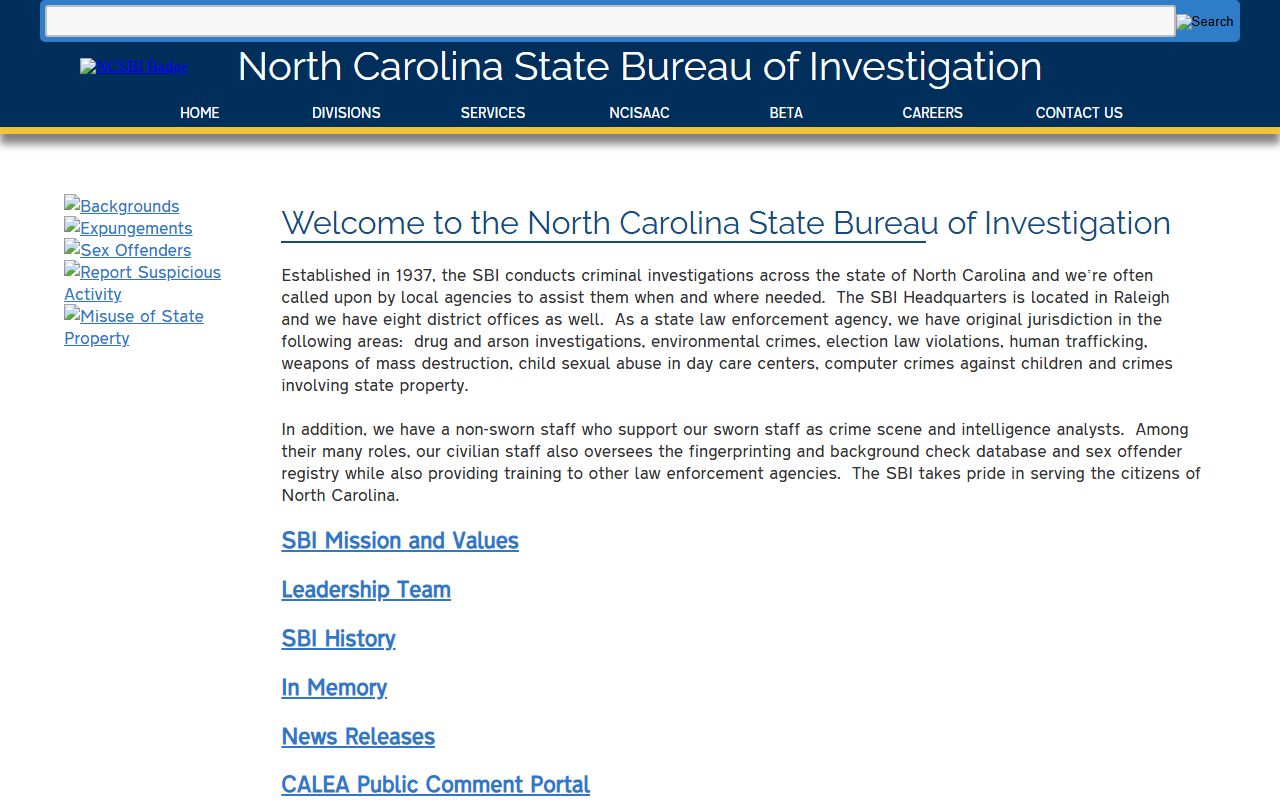
The North Carolina State Bureau of Investigation was set up in 1937. The SBI runs the statewide criminal history database. It provides fingerprint-based background checks for licensing, personal review, and other uses. The SBI also keeps the Sex Offender Registry, which is open to the public.
The North Carolina Department of Public Safety oversees state prisons, community corrections, juvenile justice facilities, and the State Highway Patrol. The department has about 3,000 employees plus around 10,000 National Guard soldiers and airmen. DPS provides access to offender records through the Offender Public Information Search, which lets you look up incarcerated people, probationers, and parolees.
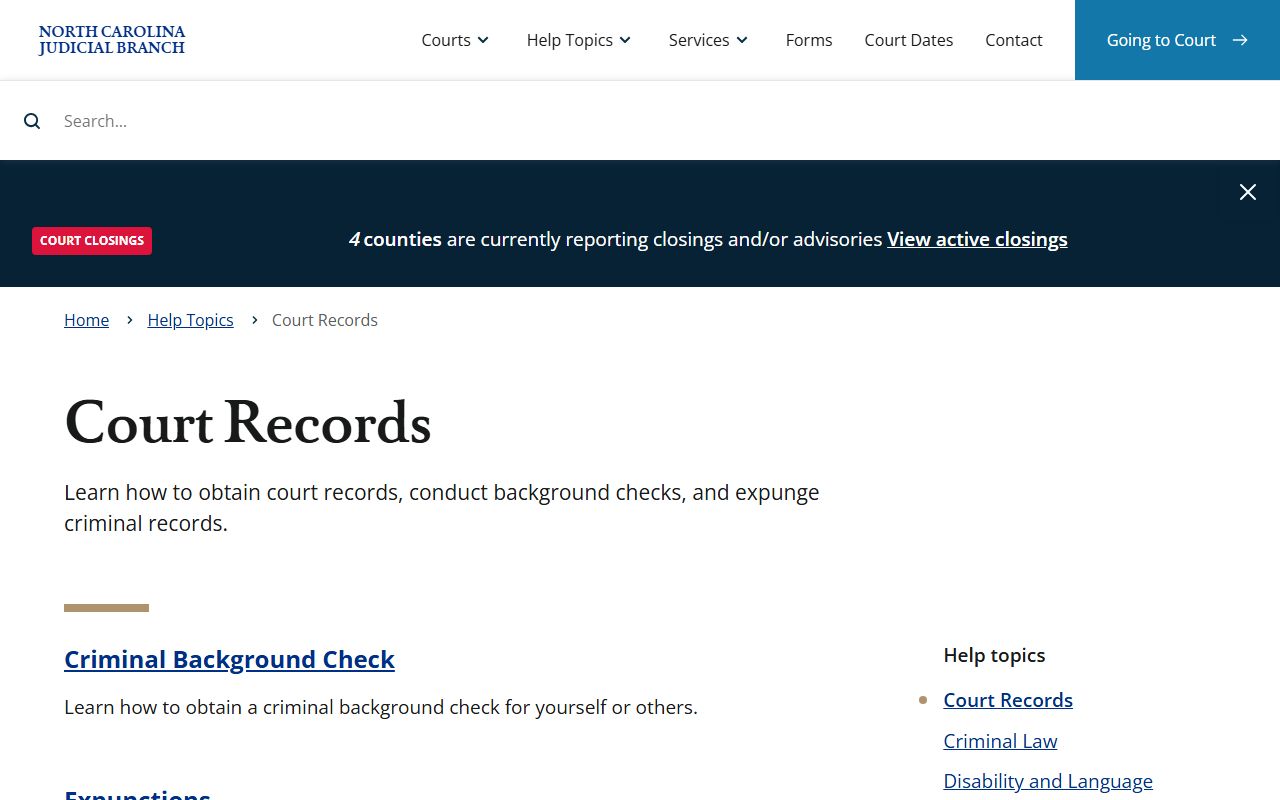
Criminal background checks can also be done through the courts. You can visit a public self-service terminal at any clerk of court office in North Carolina. The terminal lets you search by defendant name, case number, or victim name. The courts also provide information on how to expunge certain charges or convictions through the expunctions process in North Carolina.
How to Get Copies of North Carolina Public Records
Getting copies of public records in North Carolina depends on the type of record. For vital records, you can mail a request to the NC Vital Records Section, 1903 Mail Service Center, Raleigh, NC 27699-1900. Include the names, dates, and your payment. You can also visit the office in person at 225 N. McDowell St. in Raleigh by appointment. Walk-in requests are processed the same day when possible. Mail requests may take several weeks.
For court records, go to the Clerk of Superior Court in the county where the case was filed. You can ask for copies in person or call ahead. Some courts take mail requests. Certified copies cost more than plain ones. The clerk can search records by name or case number. Under the North Carolina Public Records Act, you do not have to state a reason for wanting the records. The records are open to anyone.
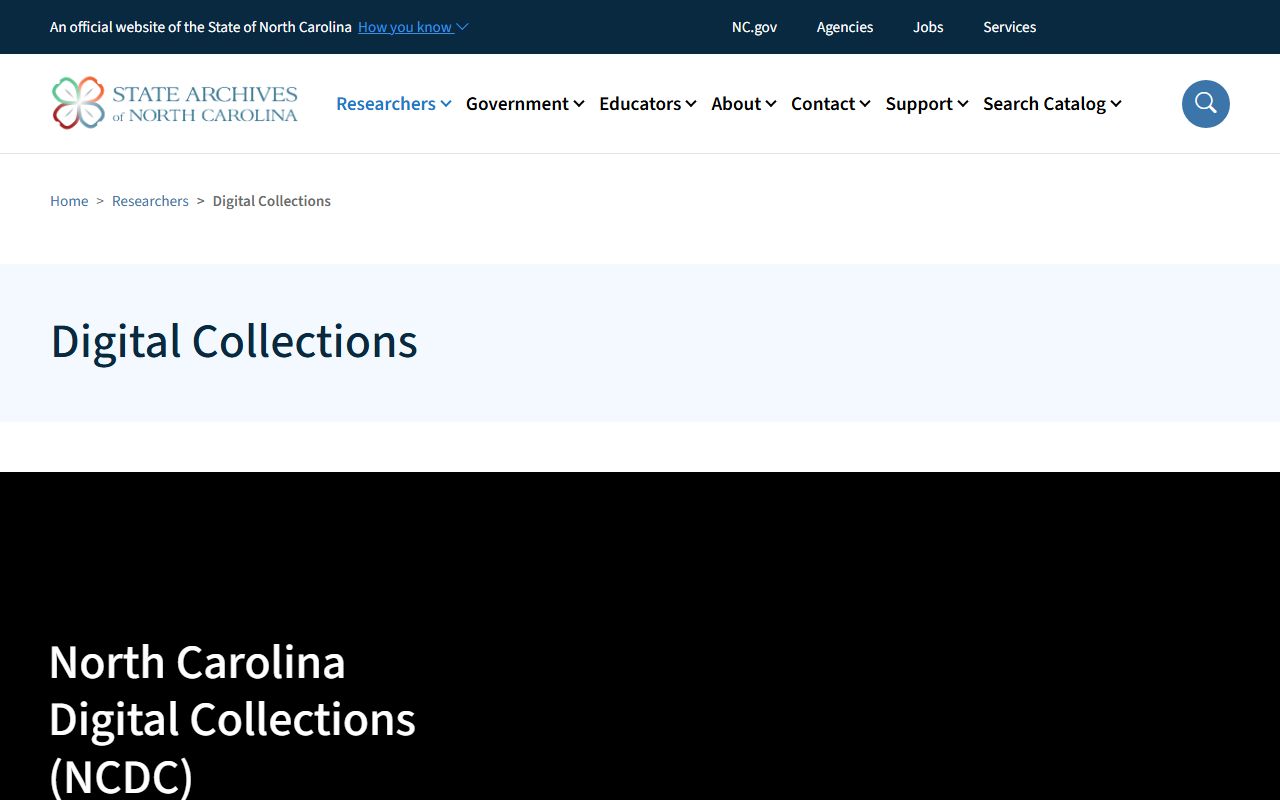
The NC State Archives Digital Collections offer free online access to over 90,000 items. These include vital records indexes, military records, land grants, court records, and legislative materials. The NC MOSAIC project provides access to Supreme Court cases and colonial records. Family records such as Bible records and cemetery records are also available through the North Carolina Family Records Online project.
Note: Fees for copies vary by office and record type, so always call the agency to confirm current costs before sending payment in North Carolina.
North Carolina Public Records Laws
The right to access public records in North Carolina comes from state law. N.C.G.S. Chapter 132 says that public records belong to the people. Any person can ask to see or copy them. Government agencies must respond to requests in a reasonable time. They can charge for the actual cost of making copies, but they cannot charge a fee just for looking at records.
Some records have limits on access. Social Security numbers, financial account numbers, and details about minor children may be removed from public copies. Law enforcement records may be restricted under N.C.G.S. 132-1.4. Adoption records are sealed. A court can order records sealed if a person shows good cause. But these cases are rare. Most public records in North Carolina are fully open.
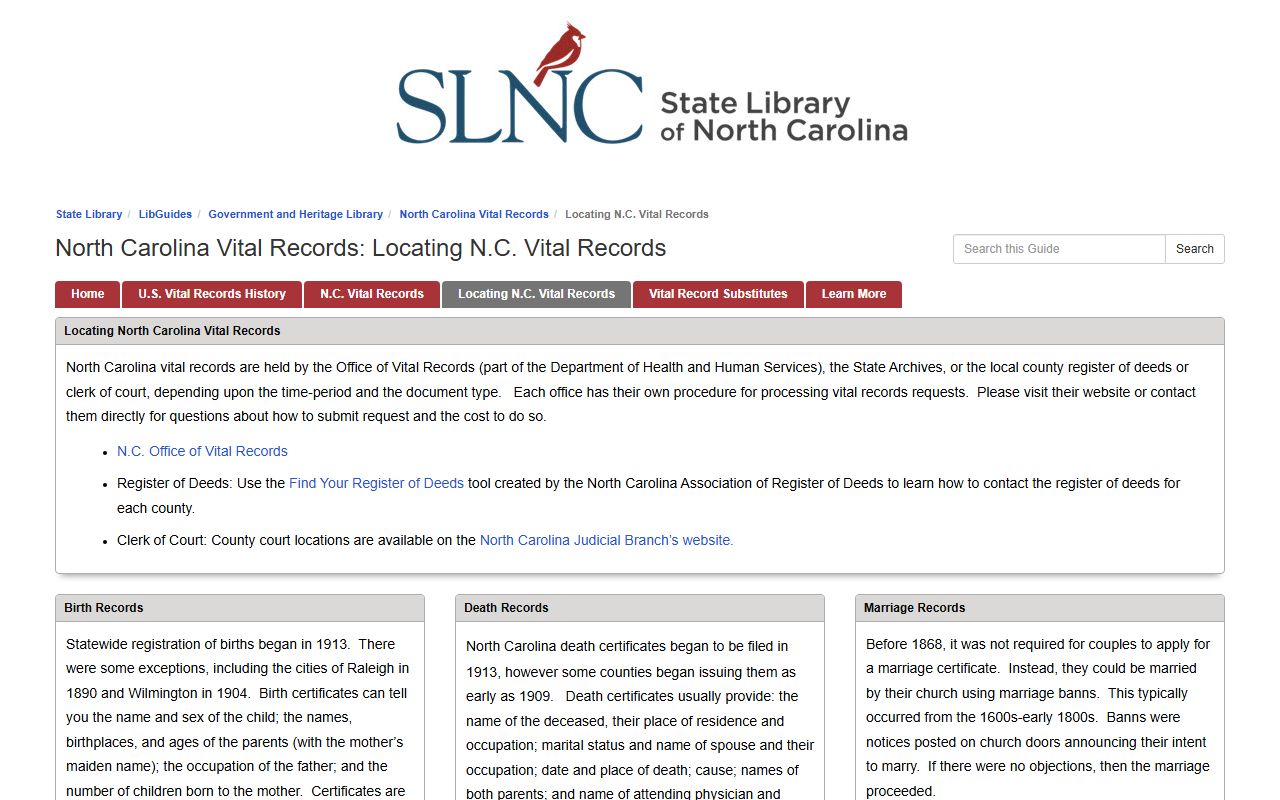
The NC Department of Health and Human Services manages vital records through the Division of Public Health. NCGS 130A-93 sets out who can get certified versus uncertified copies of vital records. Certified copies are available to the person named, their family, or their legal representative. Uncertified copies may be available to others for research or reference. Each county Register of Deeds also provides vital records and is governed by the same North Carolina General Statutes.
Browse North Carolina Public Records by County
Each county in North Carolina has its own Clerk of Superior Court and Register of Deeds that keep public records. Pick a county below to find local contact info and resources for public records in that area.
Public Records in Major North Carolina Cities
Residents of major cities access public records through their county offices. Pick a city below to learn about public records in that area.