
Stokes County Public Records Online
Stokes County keeps public records at government offices in Danbury, North Carolina. The county gives access to court files, property records, vital records, and other official documents. Stokes County public records are open to the public under state law. Danbury serves as the county seat and the primary hub for records requests. Residents and researchers can visit in person or use online tools provided by county and state agencies to search Stokes County records.
Court Records in Stokes County
The Clerk of Superior Court in Danbury stores court records for Stokes County. Civil case files, criminal records, and special proceedings are on file at the courthouse. Copies of judgments, orders, and motions can be requested from the clerk.
Stokes County court records cover civil suits, small claims, estate filings, and criminal cases. The North Carolina Courts system provides statewide search tools. Staff in Danbury can guide your search. Some Stokes County public records from the courts may be restricted or sealed by a judge. Check with the clerk to confirm availability.
Stokes County Property Records
Property records in Stokes County are filed with the Register of Deeds in Danbury. Deeds, liens, plat maps, and easements are all stored here. These records document ownership history for every parcel in the county.
Searches can be done by owner name, parcel number, or book and page. The Stokes County government website may provide contact details and some online resources. Stokes County covers a mix of rural and mountain terrain, and property records reflect that variety. Staff at the Register of Deeds can help with complex or historical searches. Stokes County public records for property are used by buyers, sellers, and researchers in the northern Piedmont and foothills.
The image below shows the North Carolina vital records portal used by Stokes County residents.
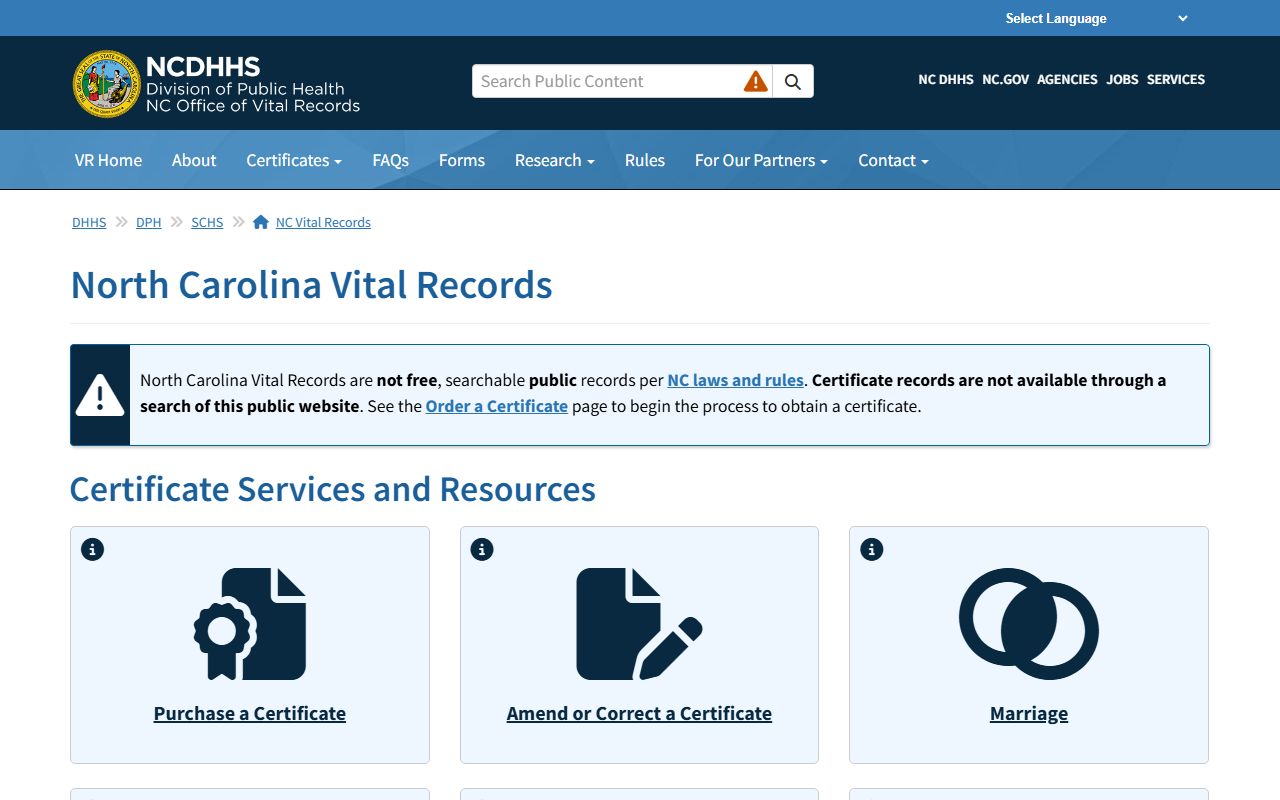
This state portal allows residents to order certified copies of birth and death certificates.
Vital Records for Stokes County
Birth and death records are managed at the state level in North Carolina. The North Carolina Vital Records office issues certified copies of birth and death certificates. Stokes County residents can order these by mail or visit the state office in person.
Marriage licenses are issued by the Stokes County Register of Deeds in Danbury. Past marriage records are on file at the same office. Stokes County public records for marriages include both names, the date, and other key information. Some older vital records may also be available at the county level.
Note: Stokes County marriage records from the 1800s may be held at the state archives rather than the local office in Danbury.
How to Request Stokes County Records
Chapter 132 of the North Carolina General Statutes guarantees the public's right to access most government records. Stokes County offices must handle requests promptly. You can submit a request in person at the office in Danbury, by mail, or by email in some cases.
Common types of Stokes County public records:
- Court case files and legal orders
- Property deeds and surveys
- Marriage license records
- Tax bills and property assessments
- Voter registration data
Each office sets its own fees. Certified copies cost more than standard copies. Contact the specific Stokes County office for pricing and turnaround times.
Stokes County Tax Records
Tax records make up a key part of Stokes County public records. The Tax Administration office in Danbury tracks assessed values, tax bills, and payment history. You can search by owner name or parcel ID.
Buyers check Stokes County tax records before a property purchase. Owners review their assessments and can file appeals through the tax office. The county updates property values on a regular schedule. Stokes County tax records give a picture of the fiscal history of land and structures in this rural part of North Carolina.
Historical Records in Stokes County
Stokes County was formed in 1789. More than two centuries of records are on file. The North Carolina State Archives holds many of the oldest Stokes County documents, including early deeds, court minutes, and estate papers.
Family history researchers value Stokes County records for tracing ancestry in northern North Carolina. Wills, land grants, and tax lists from the late 1700s are among the earliest files. Danbury has a long history as one of the smallest county seats in the state. Local libraries may also hold copies of some Stokes County public records. These documents preserve the county's heritage for future study.
Note: Some of the oldest Stokes County records are fragile, and the state archives may limit how they can be viewed.
Online Access to Stokes County Records
Stokes County public records are increasingly available online. The North Carolina state portal connects residents to government services. Some property and tax records can be searched through county or state websites.
Online tools let you search Stokes County records from home. You can check property values, find court dates, and look up office details. Not all records are online yet, but digital access is expanding. The Legal Aid of North Carolina site offers guidance for those who need help with legal matters tied to Stokes County public records. Always confirm important data with the source office in Danbury, as online records may not reflect the latest filings.
Stokes County Records and Copies
Getting copies of Stokes County public records is a quick task. Go to the Register of Deeds in Danbury with a name or parcel number. Staff will pull the file and make copies on the spot. Plain copies cost just cents per page. Certified copies have a flat fee. You do not need to give a reason for your request.
Court files are at the clerk's office nearby. Civil suits, criminal cases, and estate records are on hand. The NC Courts website helps with case look-ups from home. For birth or death records, the NC Vital Records office handles all orders. The NC state portal has links to the right forms. Stokes County public records are well kept and go back to the late 1700s.