
Pitt County Public Records Search
Pitt County stores public records at government offices in the Greenville area of North Carolina. The county provides access to court files, property records, vital records, and many other official documents. Pitt County public records are open to the public under North Carolina law. Greenville is the largest city in the county and serves as the hub for most government services. Residents, researchers, and visitors can search records in person or through online portals maintained by county and state agencies.
Pitt County Court Records
The Clerk of Superior Court in Greenville manages court records for Pitt County. This office stores civil case files, criminal records, and special proceedings. You can request copies of judgments, orders, and other court documents at the courthouse.
Pitt County court records cover a wide range of legal matters. Civil suits, estate cases, small claims, and criminal charges all leave records on file. The North Carolina Courts system provides statewide tools to locate case data. Pitt County is one of the more active court systems in eastern North Carolina. Staff at the Greenville courthouse can help you find the records you need. Some files may be sealed or restricted.
Note: Pitt County court records for pending cases may only be partially available until the case reaches a final ruling.
Property Records in Pitt County
The Pitt County Register of Deeds handles property records. Deeds, liens, plat maps, and easements are all filed at this office in Greenville. These records document ownership history for every parcel in the county.
You can search Pitt County property records by owner name, parcel number, or book and page. The Pitt County government website offers online tools for some searches. Staff at the Register of Deeds can help with more detailed requests. Pitt County public records for property are used by buyers, sellers, and title professionals throughout the Greenville area and beyond.
The image below shows the Pitt County government portal for accessing public records.
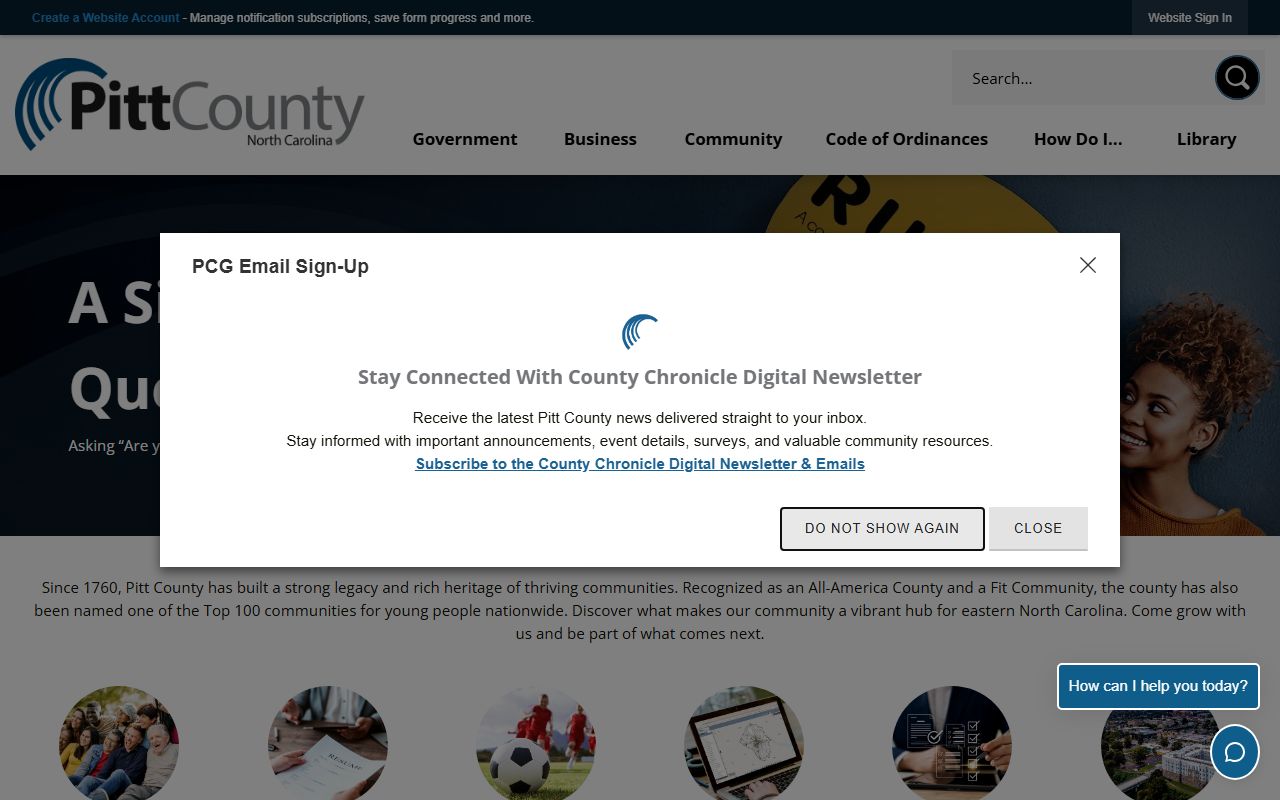
This portal links to Pitt County offices and resources for records requests.
Vital Records for Pitt County
Birth and death certificates in North Carolina are issued at the state level. The North Carolina Vital Records office handles certified copies. Pitt County residents can order birth and death records by mail or in person at the state office.
Marriage licenses are issued by the Pitt County Register of Deeds in Greenville. Copies of past marriage records are on file at the same office. Pitt County public records for marriages list both parties, the date, and other key information. Some older vital records may also be available at the county level.
How to Get Pitt County Public Records
North Carolina's public records law is found in Chapter 132 of the General Statutes. This law grants the public the right to inspect and copy most government records. Pitt County offices must respond to requests in a reasonable time frame.
Common types of Pitt County public records include:
- Court case files and judgments
- Property deeds and surveys
- Marriage license records
- Tax assessment records
- Voter registration data
Each Pitt County office sets its own fees. Certified copies cost more than plain copies. Contact the specific office in Greenville for current pricing and turnaround times.
Pitt County Tax Records
Tax records are a major part of Pitt County public records. The Tax Administration office tracks assessed values, tax bills, and payment history for all parcels. You can search tax data by owner name or parcel ID at the office in Greenville.
Buyers often review Pitt County tax records before purchasing property. Owners can check assessments and appeal if they disagree with a value. The county updates property values on a cycle set by the board of commissioners. These records are helpful for anyone interested in property values in the Greenville area of North Carolina.
Note: Pitt County tax values may change after a scheduled revaluation, so check with the tax office for the latest data.
Historical Public Records in Pitt County
Pitt County was established in 1760. Its records span more than 260 years. The North Carolina State Archives holds many of the oldest Pitt County records, including early deeds, court minutes, and estate papers.
Family history researchers often use Pitt County records to trace roots in eastern North Carolina. Land grants, wills, and tax lists from the late 1700s are among the oldest files. Local libraries in Greenville may also hold copies of some Pitt County public records. The county's long history and large population make its archives a rich source of information for genealogy and historical research.
Online Access to Pitt County Records
Many Pitt County public records are available online. The North Carolina state portal connects residents to government services and databases. Some property and tax records can be viewed through county or state websites.
Online tools let you search Pitt County records from home. You can check property values, look up court dates, and find office contact details. While not all records are online, Pitt County continues to expand digital access. The Legal Aid of North Carolina site provides help for those who need legal guidance related to public records. Verify important details with the source office, as online data may not reflect the most recent filings in Pitt County.
Pitt County Public Records and Archives
Pitt County holds a large set of public records due to its size and population. The Register of Deeds in Greenville files deeds, maps, and trust papers on a daily basis. Each item gets a unique index entry. This helps staff find it fast. Walk-in searches are free. Copies have a small fee per page.
The clerk of court keeps case files for all civil and criminal matters. Old records may be stored off-site. Ask the clerk for help with those. The NC Courts website shows how to search for case data. You can also order vital records through the state. The NC state portal links to forms and guides for each type of record.