
Jackson County Public Records
Jackson County public records are held by government offices in Sylva, the county seat. Located in the western North Carolina mountains near the Blue Ridge Parkway, Jackson County is home to Western Carolina University and part of the Qualla Boundary. The county maintains property deeds, court records, vital documents, and tax data. These records are accessible to the public under North Carolina's Public Records Act and can be requested by anyone.
Jackson County Records Access
The North Carolina Public Records Act under Chapter 132 applies to Jackson County. All records made or received by county offices are public property. You can request them without explaining your reason.
Jackson County offices are in Sylva. The Jackson County website lists departments and contact information. Some records are available online. For others, visit Sylva or send a written request. Viewing records in person is usually free. Copy fees may apply for printed pages.
The Jackson County government provides public records access through its offices in Sylva.
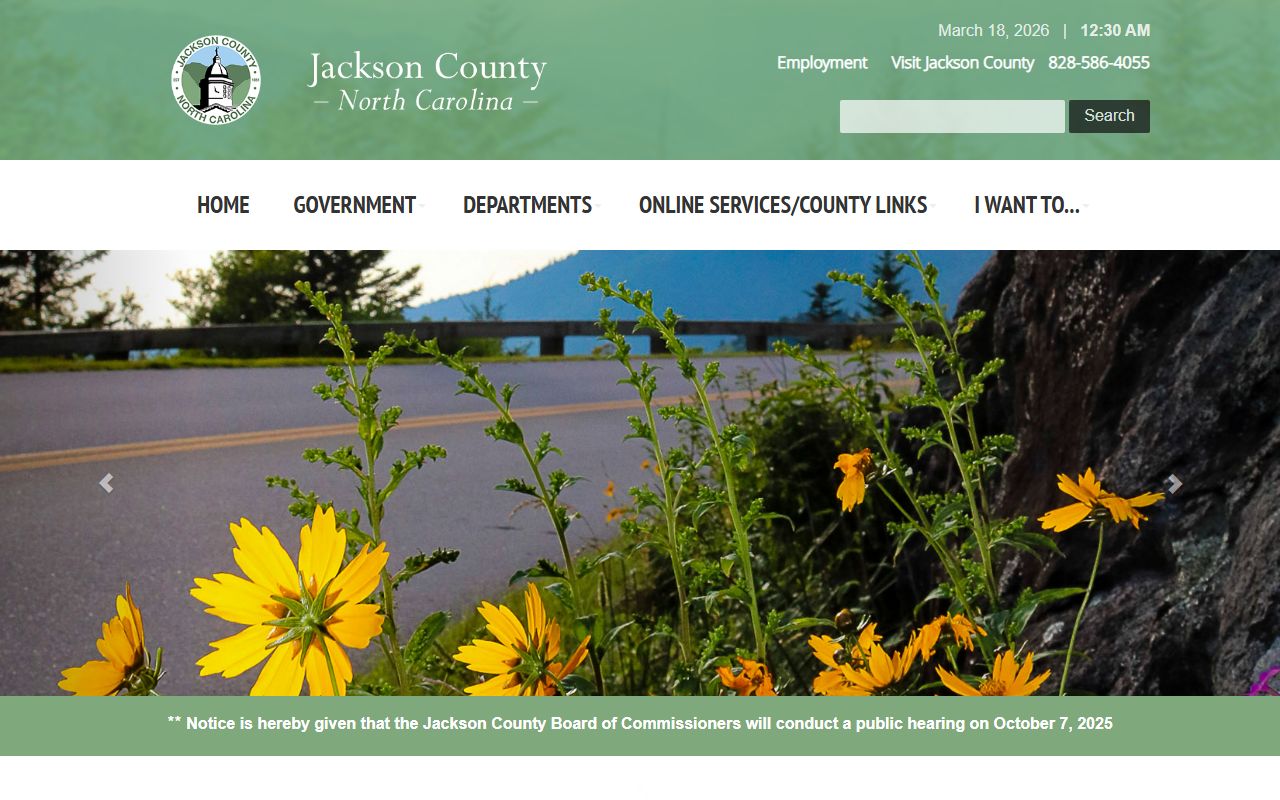
The county website connects residents with various public records tools and department information.
Property Public Records in Jackson County
The Jackson County Register of Deeds records all land documents. Deeds, deeds of trust, plat maps, liens, and easements are filed at the office in Sylva. Each document is a public record once filed.
You can search Jackson County property records by owner name, parcel number, or document reference. The Register of Deeds staff can help with in-person searches. Some records may also be available online through the county website.
Jackson County's mountain terrain means property records often include unique boundary descriptions, conservation easements, and topographic plat maps. Much of the county is national forest land. Private parcels have full records on file at the Register of Deeds in Sylva.
Property tax records are also public. The Jackson County Tax Office tracks assessed values, bills, and payment data for all parcels. Mountain real estate values have shifted in recent years, and these changes appear in the tax records.
Note: Jackson County property records may include documents related to the Qualla Boundary and other distinctive land designations in the area.
Court Records in Jackson County
The Clerk of Superior Court in Sylva maintains all court records for Jackson County. Civil lawsuits, criminal cases, estate matters, and family law filings are all on record. Each case file is public.
Search Jackson County court records through the North Carolina Courts online system. Enter a party name or case number. Basic details are free. Full documents may require a trip to the courthouse in Sylva or a written request to the clerk.
Jackson County court records cover the full range of legal proceedings heard in the county. Estate files, land disputes, and other civil matters are common requests. The clerk office in Sylva processes records requests from both local residents and researchers.
Vital Records for Jackson County
Birth, death, and marriage records in Jackson County are filed with the Register of Deeds. The North Carolina Vital Records office also maintains statewide copies. Certified copies are available from either location.
Marriage licenses in Jackson County require both applicants to appear at the Register of Deeds in Sylva. The license remains valid for 60 days. After the ceremony, the officiant returns the signed license to Jackson County for permanent filing as a public record.
Older vital records from Jackson County may be at the State Archives in Raleigh. Historical records are valuable for genealogy and family research in the mountain region.
Jackson County Tax Public Records
Tax records in Jackson County are public documents managed by the Tax Office. These records cover assessed values, bills, and payment status for all property in the county.
Jackson County tax records show:
- Property owner name and address
- Assessed land and building values
- Annual tax bill amounts
- Payment history and balances
- Tax liens if applicable
Reappraisals in Jackson County happen on a regular cycle. New values are public once finalized. The mountain real estate market has driven changes in Jackson County property values in recent years, which show up in the tax records.
Requesting Jackson County Public Records
Visit offices in Sylva for the fastest service. Bring your ID and details about the records you need. Staff can search and make copies quickly.
Mail requests work for those who cannot travel to Sylva. Write to the correct Jackson County department. Be specific about what you need. Include names, dates, or reference numbers. Simple requests are handled within days.
The North Carolina state portal and the Jackson County website offer some online search tools. Court records are available through the state system. Property and tax records may also be searchable online. For records not in digital form, contact Jackson County offices directly.
Note: Jackson County offices in Sylva are open during standard weekday business hours, so plan visits accordingly.
Jackson County Records Rights
Chapter 132 of the General Statutes protects your right to access Jackson County public records. If a request is denied, ask for the legal reason in writing. The Legal Aid of North Carolina can advise you. Courts can order records released when no valid legal basis exists for denial.
Jackson County Records for Copies and Archives
Copies of Jackson County records are easy to get. Go to the right office in Sylva. The Register of Deeds prints land and vital record copies on the spot. Plain copies cost a few cents per page. Certified copies cost more. They carry an official seal. Bring your ID and any names or dates you have.
Court file copies come from the Clerk of Court in Sylva. State law sets the fees. Give staff a case name or number. Jackson County is a mid-size mountain county, so wait times tend to be fair. You can also send a mail request if you live far from Sylva.
Jackson County records include deeds, wills, plat maps, liens, tax rolls, and court logs. Old files from the 1800s may be at the State Archives in Raleigh. You can view them for free. The archives add depth to any search of land or family ties in the western mountains. For quick court data checks, use the North Carolina Courts site from home.