
Asheville Public Records
Asheville is nestled in the Blue Ridge Mountains and serves as the county seat of Buncombe County. The city is a regional hub for western North Carolina. City departments generate public records covering everything from police activity to land use planning. The City Clerk oversees official documents like council minutes and adopted ordinances. Under state law, these records are open to the public for inspection and copying.
Asheville Public Records Law
NCGS Chapter 132 gives the public the right to access records held by Asheville city offices. This law defines public records broadly. Any document made or received by a government office during the course of business is covered. The statute applies to all formats including paper, email, and digital files.
Asheville must respond to requests within a reasonable period. You do not need to explain why you want the documents. Fees for copies are based on actual cost. Viewing records in person at a city office is free of charge.
Some categories are exempt from disclosure. Personnel records, medical data, and certain law enforcement files may be withheld under specific state statutes. Asheville will cite the legal basis if it denies any part of your public records request.
How to Request Asheville Public Records
Asheville accepts requests by phone, email, mail, and in person. The city website lists all departments and their contact information. Start with the office most likely to hold the records you need. The City Clerk can help route your request.
The Asheville city homepage links to departments that maintain public records.
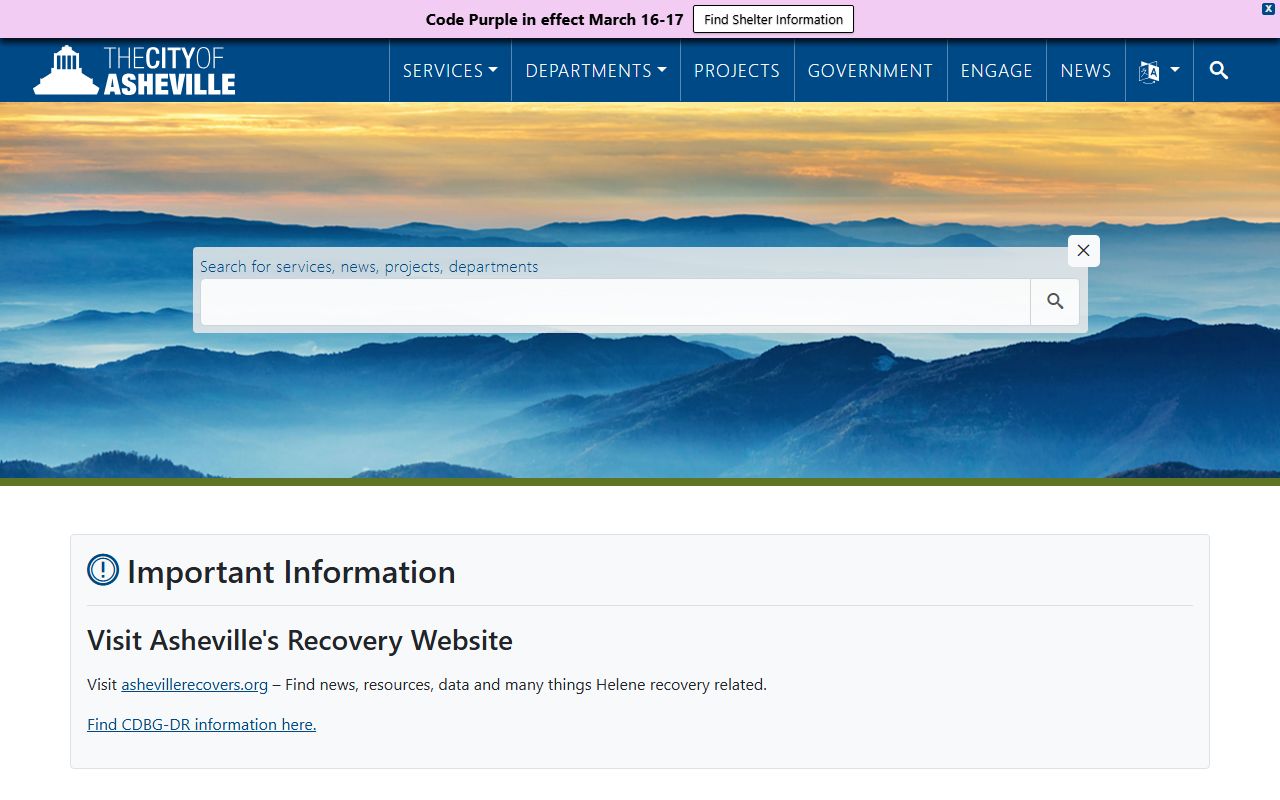
From this site, you can reach the clerk, police, and planning offices to request public records in Asheville.
Include these details when you submit a request:
- The department that holds the records
- Dates, names, or addresses tied to the file
- Case or permit numbers if known
- Your preferred format for receiving copies
- A phone number so staff can reach you
Note: Asheville processes most routine public records requests within five to ten business days.
Police Public Records in Asheville
The Asheville Police Department maintains public records for reported crimes, arrests, and traffic accidents. Incident reports and accident reports are the items people ask for most. You can request copies through the police records section.
Asheville police publish some data online. Crime reports and activity summaries are available for public review without a formal request. These tools help residents stay informed about police work in the city.
Restrictions apply to some police records. Open investigation files are not released until the case ends. Body camera video requires a court petition under North Carolina law. Contact the records unit to learn what public records are available for your specific situation.
Council and Clerk Records
Asheville City Council meetings create public records each session. The City Clerk files agendas, minutes, and vote tallies. Past meeting documents are posted online and available for download.
The Asheville City Clerk office manages official city public records.
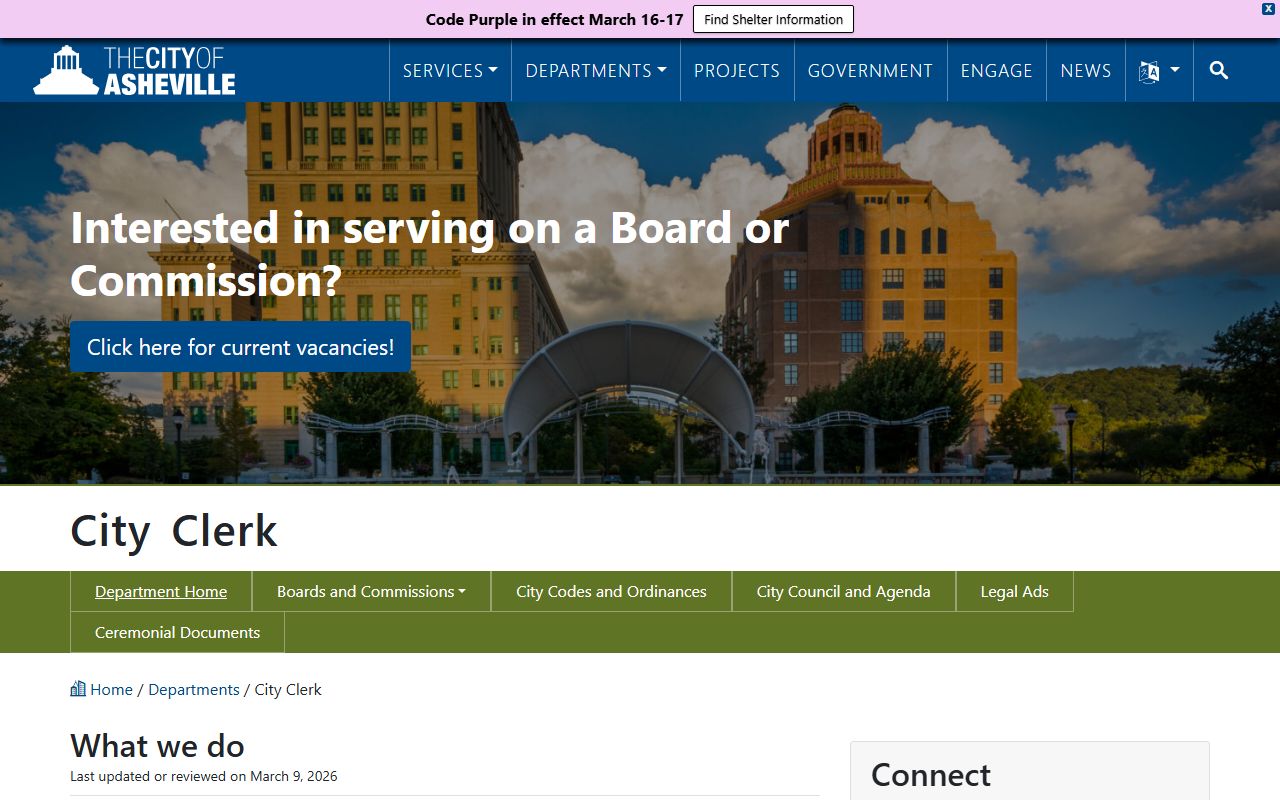
This office handles requests for council minutes, ordinances, and other official public records in Asheville.
Ordinances and resolutions are filed as public records. Budget documents and financial reports are published each year. These records show how the city allocates its funds and what rules govern city operations.
Note: Asheville council meeting recordings are usually posted within a few days of the session and remain available as public records.
Planning and Permit Public Records
Building permits, zoning applications, and site plans are public records in Asheville. The planning department keeps these files. Each permit record includes the application, the plans submitted, and inspection results. You can search by address or project name.
Asheville's mountain terrain creates unique planning challenges. Hillside development standards and stormwater management plans produce public records that are specific to the area. These documents help property owners understand the rules that apply to building in the region.
Property deeds and tax assessments are held at the Buncombe County level. The county register of deeds and tax office handle those public records. For city permits and inspections, contact the Asheville planning department directly.
Asheville Public Records Fees
Asheville charges for copies based on the actual cost of production. Paper copies have a per-page rate. Digital files may be emailed for small requests. Staff time fees may apply when a request involves extensive searching or a large volume of files.
Response times for public records in Asheville vary by department and request size. Routine requests may be filled within a week. Complex requests that span departments or cover many years of files may take longer. If a request is denied, the city must cite the legal exemption. You have the right to challenge the decision under North Carolina law.
State Records for Asheville
Vital records like birth and death certificates are kept by the North Carolina Vital Records office. Marriage licenses are issued at the Buncombe County level. You can request vital records by mail or in person at the state office in Raleigh.
Court records for Asheville go through the Buncombe County court system. The NC courts portal offers online search tools. The state government portal provides links to other state agency public records.
For questions about access to public records, Legal Aid of North Carolina can advise you on your rights under the open records law.
Buncombe County Public Records
Asheville is the county seat of Buncombe County. Many public records that affect city residents are held at the county level rather than with the city. These include property deeds, court filings, marriage licenses, and tax assessment records. The county register of deeds handles property transfers, while the clerk of court manages case files. For detailed information on accessing county-level public records and their associated fees, visit the Buncombe County page.